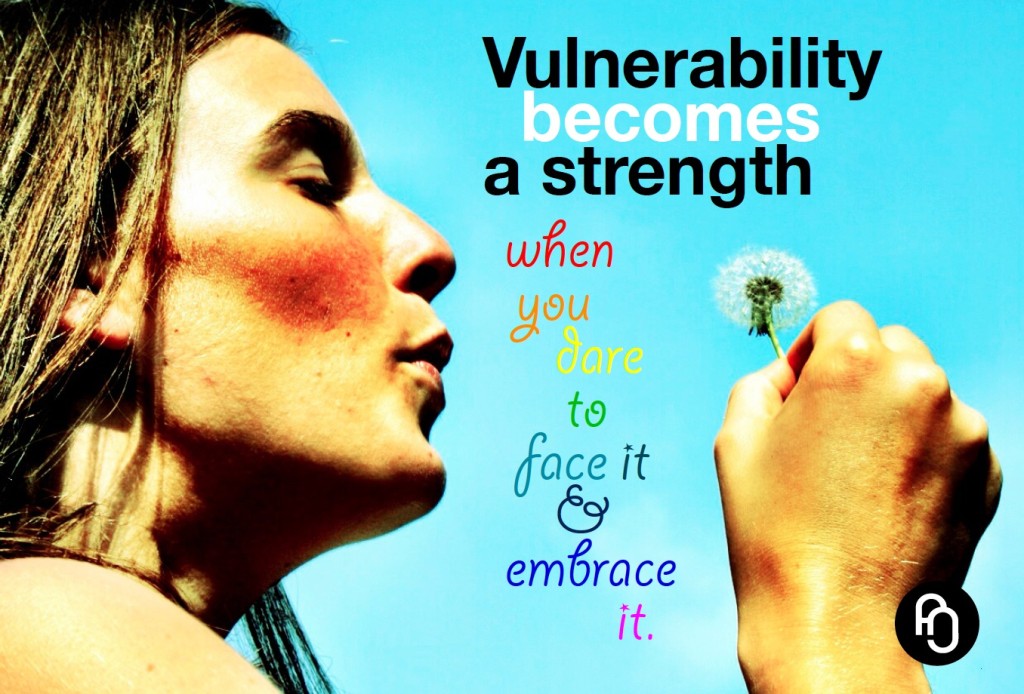
People are vulnerable as individuals and as a species. And fighting vulnerability is useless. No matter how hard you try. Simply because you can’t control everything and so your life can turn upside down at any moment of any day. You may be the King of the World, the Smartest Woman in the Universe or the Sexiest Man Alive; it won’t help. You can however hide from it. And most of us do. Behind a fancy job title, nice car or house. Interesting friends, a busy agenda, designer clothes or healthy hipster life style, but sooner or later vulnerability will find you. So what can you do? Well, it’s simple.
Simply face it and embrace it. Because when you embrace it, you no longer need to fight it. You no longer need to run or hide from it, by keeping up appearances and putting energy in this hopeless attempt to avoid the discomfort of feeling it. You can now be as you are, vulnerable, instead of pretending not to be. The way I see it: vulnerability is indestructible. So by letting it in and become a part of you, in a way that makes you indestructible. Daring to be vulnerable gives you power to be.
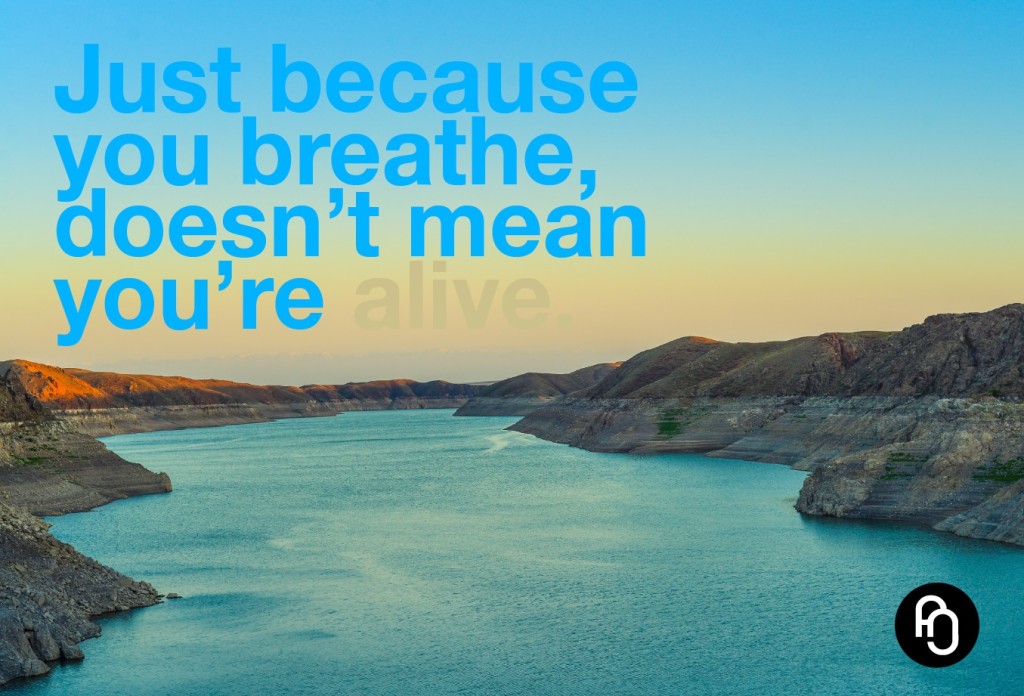
From time to time it’s good to ask yourself: “Am I alive?” Because it’s not uncommon to just be busy doing what you’re always doing. To be caught up in a routine. And that routine may very well result in hours, days, weeks, months or even years of living, without actually being alive. Because there’s more to living, than just breathing. Imagine someone in a coma and it becomes clear… I recently attended a re-birthing workshop and I experienced the difference between A) normal breathing: a mostly shallow, kind of mechanic and unconscious way of getting the bare minimum of oxygen ‘shots’ and B) breathing with full awareness, in a rich flow, organic and fully open to receive life’s energy in all it’s splendor. It let me experience the meaning of the phrase: “Just because you breathe, doesn’t mean you’re alive”. And so I challenge you, as I challenge myself, to wonder: am I really alive or mostly just busy breathing?
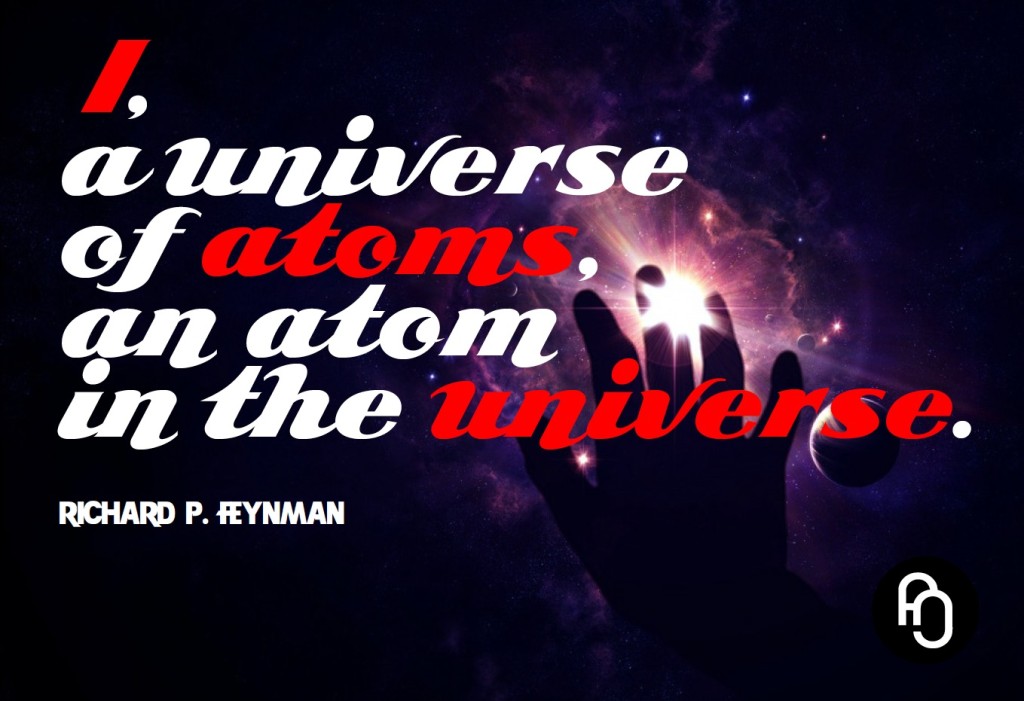
I guess you’re familiar with this sensation: one moment you feel great, and the next… well not so great. I sometimes feel like I’m nothing and sometimes I feel as though I’m everything. It’s a really fine line, much like it is with being crazy or brilliant. John Lennon had a nice way of putting it. He said: “Part of me suspects I’m a loser. The other part of me thinks I’m God Almighty”. I wrote a post about that one too. Anyway. A couple of days ago, I stumbled upon the “I, a universe of atoms…” quote by the American physicist Richard P. Feynman (1918 – 1988). And it’s stuck in my head ever since. Because to me his words are both mind blowing and heart warming. The thought of “I” being a tiny, stand alone atom – and an infinite, whole universe at the same time, blows my ego off it’s socks. Because “I” isn’t (only) the ‘earthly me’. “I” is a single atom and an entire universe, completing one another. Think about that when you’re looking at yourself in the mirror. So yes, it’s a quote I gratefully meditate on. It’s so simple and yet so deeply profound. It makes me feel humble and larger than life at the same time – it’s liberating. Look at us humans. Look at you, look at me. We are both nothing and everything. Again. That’s just… wow.
Imagine you’re looking for something, but you can’t find it. Annoying. Yes. Very. But then, maybe you’re not supposed to find it. Or maybe you’re just looking in the wrong place. Or maybe… you already found it, but you don’t realize it yet. Whatever the reason is, you might want to stop searching. Why? Well think about it: as long as you’re busy searching – you’re not… finding!
Dear friends, it’s been more than a year since my last post! Honestly, I needed the break but a lot of good things have happened to me in the meantime. Apart from a great time at Eyeworks Netherlands, where I worked as a Senior Creative with some great people at the Program Development Team, it were exciting times for me personally as well. Too much to tell you in one post. But I will share more in the coming months, because it’s been truly transformational.
I’m planning on a brand new start of focusNjoy at the end of April. And this time, I intend to actually make some money haha – because running an ad-free blog is great, but from a financial point of view it wasn’t a success and one of the reasons for me to get back to television. Later in 2014 I intend to finally start with my workshops in Amsterdam. I’m super excited about that but let’s see how things develop. Anway – I’m back and I’m feeling fresh. Hoping to hear from you – always feel free to send me an email and say hi!
Love, Stijn.
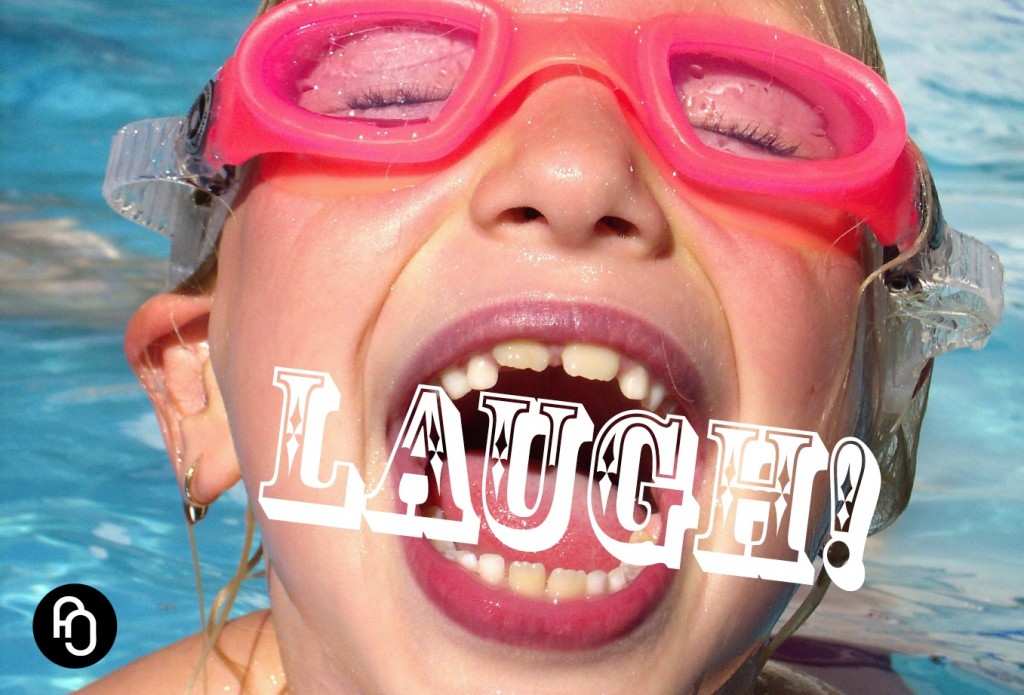
Laughing is fun, free and healthy. It lowers your stress levels and strengthens your immune system. And did you know six-year-olds laugh an average of 300 times a day and adults only 15 to 100 times? Makes you think right? No wonder grown-ups risk getting all stressed out! Lets all laugh more!
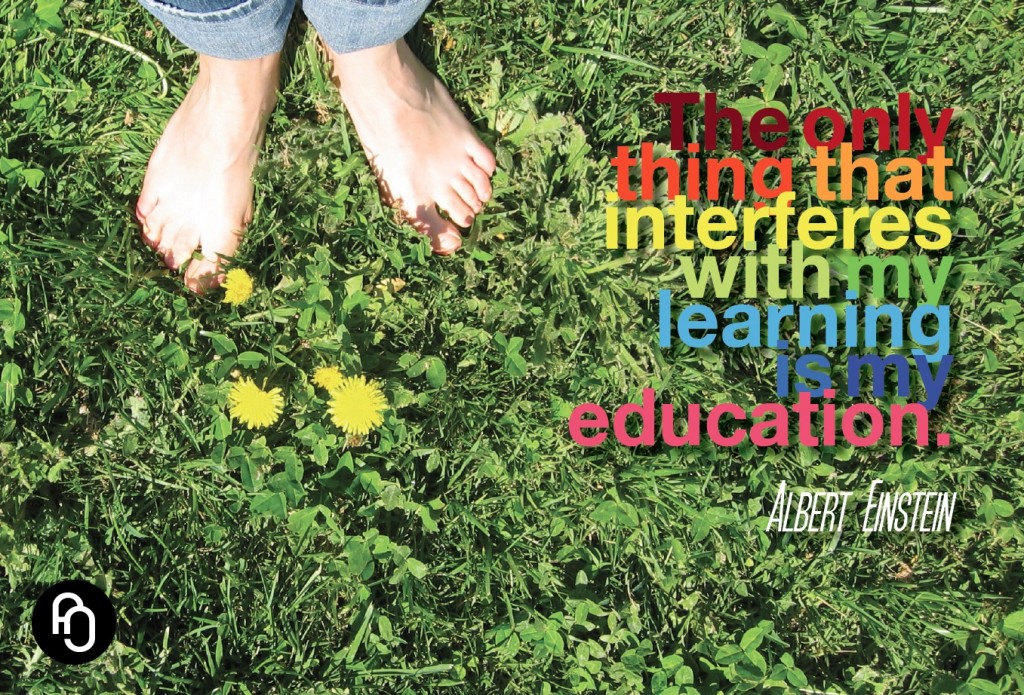
Education is a means to ‘survive’ in modern society. It gives us a frame of reference to which we all can relate. When we look closer into this frame of reference, it turns out to be a collection of rules and patterns, and modes of thinking – more or less presented like certainties on which we can build our realities. Paradoxically, in order to learn we need do let go of certainties. To make new discoveries and to gain revolutionary insights we need “think out of the box” and leave the certainties our education gave us. And is exactly that – forgetting what we know – what makes it hard to learn.