Imagine a ball and this ball is your goal. It represents something you wish for. It can be the tiniest of things and it can be a as huge as your life’s mission. Whatever it is: keep your eye on it. At all times if possible. Because whatever you give attention to, will grow. That’s the idea. Without your focus on it, the ball is just a ball and it won’t go anywhere until you play with it. Only when you play with it, it will go into a certain direction. It will bounce, it will spin, it will go fast, slow, straight and with a curve. It will be in your reach and sometimes out. It doesn’t matter. As long as you stay alert and pay close attention to what is happening and where it’s going, you can always get possession of the ball and ultimately score your goal. Come to think of it, maybe the ball is the goal. Just like the journey is the destination, as I’ve written about in this column. Then, keeping your eye on the ball always pays off.

Here’s a little poem that I once wrote. I recently decided to post it (and analyze it’s meaning).
When I have an objective,
I will be much more effective,
when I keep being objective.
First, what exactly does being objective mean? It means: 1. (Philosophy) existing independently of perception. 2. undistorted by emotion or personal bias. 3. of (or relating to) actual and external phenomena as opposed to thoughts, feelings etc.. So, why is that important? Because when striving for an objective, it’s easy to get caught up in all kinds of distractions and assumptions. We become dependent of perception, we are distorted by emotion or worse: personal bias and we relate to our constantly changing thoughts as opposed to actual phenomena. To be objective, start with a clean sheet and keep it clean as long as you can – for it keeps you objective along the way.
Thanks to a friend of mine, I stumbled upon a guy called Espen Fadnes, a Norwegian bass jumper. He says: “People who’ve seen me about to fly off a cliff say I look perfectly calm. It’s the complete opposite. I’m terrified. I’ve just developed techniques and methods to cope with that fear”. So, what is it like flying down a mountain at 250 km per hour? Espen – who is the world’s fastest flying human being 2010 – teamed up with project managers goovinn to communicate the experience of flying. It worked: this will blow your mind. It did blow my mind, I can tell you that. It’s a breathtaking mini movie (only 05:37!) that hopefully inspires you to face your own fears in one way or another.

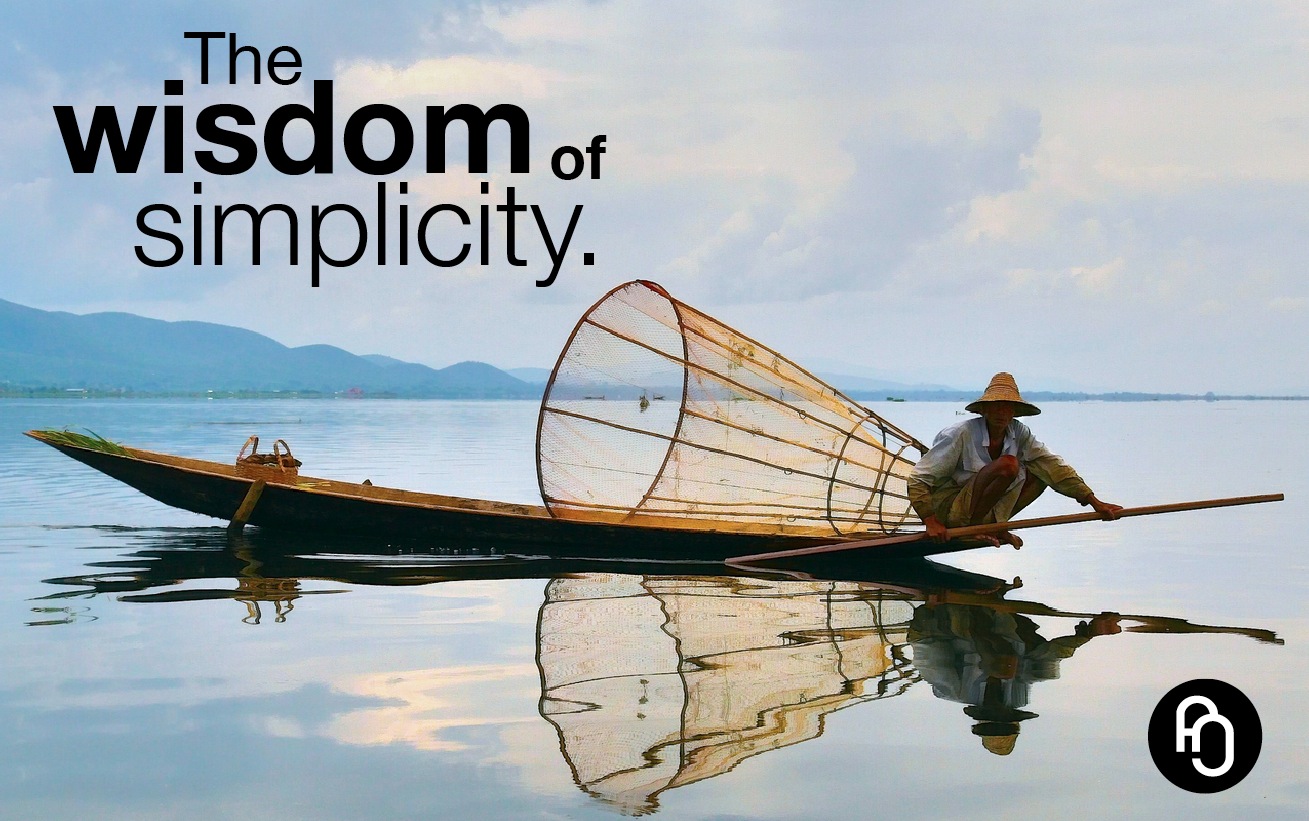
The following story is classic, probably told in many cultures. I found it thanks to a friend of mine, on Paulo Coelho’s Blog. Here it goes: There was once a businessman who was sitting by the beach in a small village. As he sat, he saw a fisherman rowing a small boat towards the shore having caught quite few big fish. The businessman was impressed and asked the fisherman, “How long does it take you to catch so many fish?” The fisherman replied, “Oh, just a short while.” “Then why don’t you stay longer at sea and catch even more?” The businessman was astonished.“This is enough to feed my whole family,” the fisherman said. The businessman then asked, “So, what do you do for the rest of the day?” The fisherman replied, “Well, I usually wake up early in the morning, go out to sea and catch a few fish, then go back and play with my kids. In the afternoon, I take a nap with my wife, and evening comes, I join my buddies for a drink – we play guitar, sing and dance throughout the night.”
read more →

Being successful or a failure, far away or close by, having lots of opportunities or no chance at all: it all depends on your perspective. Change your perspective and you will change your world. A glass that was half empty, is suddenly half full. A closed door turns into an invitation to find another way. And a setback becomes a lesson instead of a loss.
But often we’re not really aware of what our perspective on something is. We move through life on autopilot, experiencing reality without consciously examining the lens through which we see it. And so we do what we did yesterday, harvesting the same experience, unknowingly building and reinforcing patterns that become ever harder to change.
To actively check what your perspective is—whether it’s positive and empowering or negative and limiting, ask yourself one question: do I feel good or bad about this? Your feeling is a direct reflection of your perspective. And to change your perspective, gently challenge it. Ask yourself why you feel the way you do. Ask how others might experience the same situation. And most powerfully: ask whether your feeling is the truth. Because even when it’s based on your personal experience, it doesn’t mean it’s true. There are always other options to look at something. And being aware of that alone creates space. Space to make a different choice and start using the power of perspective.